Lesley's Corner
Interval Training For Conditioning the Event Horse
In the sport of Eventing, ensuring that our horses are truly fit for our level of competition is one of the best ways to prevent unnecessary injuries.

Lesley's Corner
Horses become incapable of learning when they go past a certain level of fear, anxiety, or stress. This means that if you keep hammering away at the horse, trying to teach them something when they are currently overwhelmed with stress, it will not work.
Videos
Lesley's Corner
Every single Dressage test requires the rider to change the horse's bend from one side to the other. With some tests having as many as 20 different opportunities to show the judge how good you are at changing your horse's bend. Or maybe how not so good you are at it!
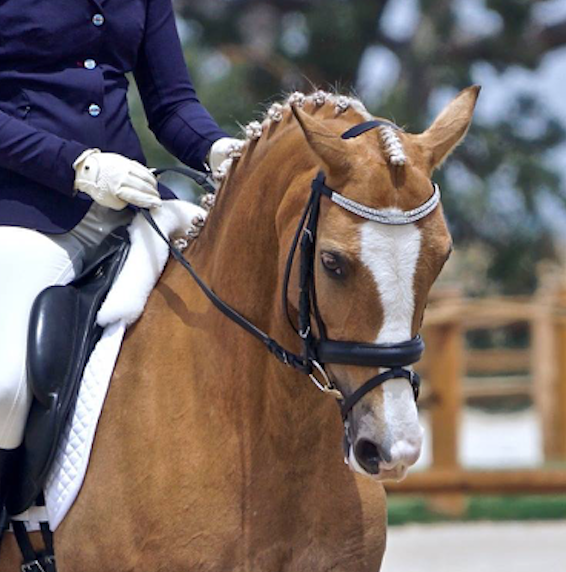
Did you know that there are 3 related but distinctly different ways of controlling your horse's shoulders?? Many riders are in the habit of using only one of these 3 methods. So they continue to struggle to accurately control their horse's shoulders in turns, circles, and lateral work.
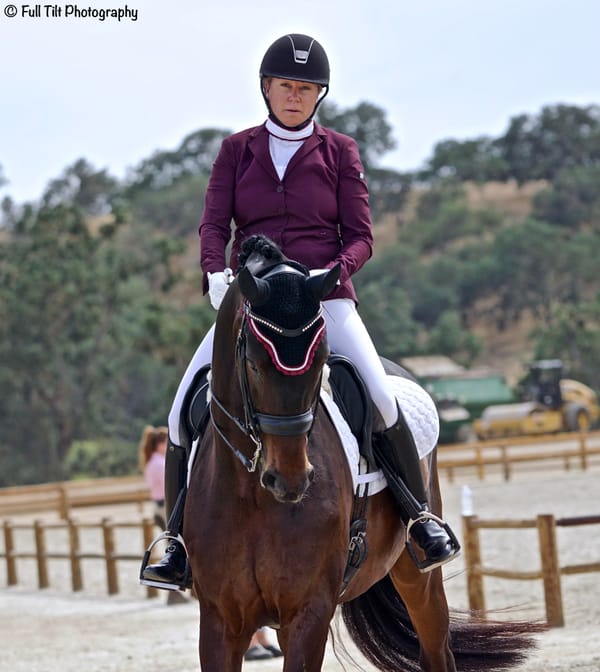
You look to be a very solid rider, with a strong seat and leg. At times you look to be quite tense in your shoulders. Which is likely caused by the fact that your head and neck tends to jut forward, well ahead of your spine. Look at this drawing:
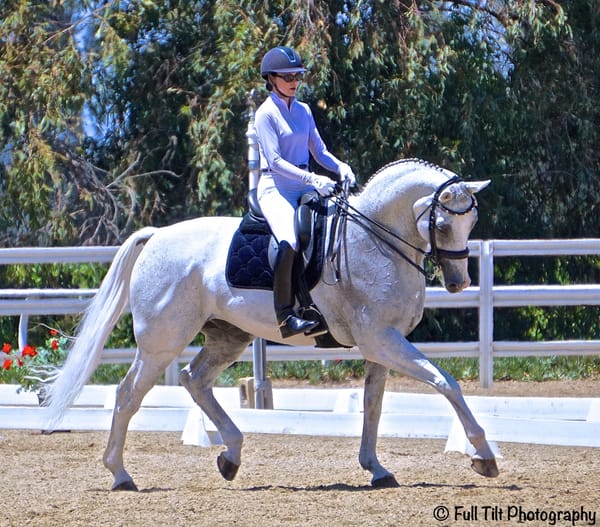
No matter what riding style or discipline you choose, you should be able to prove the solidity of your basic foundation by passing this simple test. And rather shockingly, there are many horses and riders at all levels would NOT pass this test!
Expert Coaching and Guidance for You and Your Horse!
Because one hind foot is always in the air while at the trot, it is harder for a horse to refuse a jump from a trot approach vs a canter approach. So it can be a good idea to trot into a spooky fence that you think your horse might
Some people misunderstand the term "on the forehand," which refers to the shoulders being down and the hind legs out behind the horse - regardless of where his head and neck are positioned. A low head and neck does not mean a horse is on the forehand, any
If your upper body is leaning to the inside as you try to bend your horse on a circle or through a turn, you will likely find that your horse won’t bend very well. This is because your leaning to the inside causes your horse to also lean to
When riding a Dressage test, riding accurately to the letters and making good use of the corners of the ring shows the judge that you are aware, thinking, and have good control of your horse.
The more a horse relaxes within a lateral movement, the more gymnastic value the exercise will have on his body.
"Just as the sculptor at first chisels the future outlines of his work of art with powerful blows out of the crude block of stone, and then lets it develop in increasingly finer detail in all its beauty, the aids of the rider must also become more and more
"I like to think about making my body longer in the front to make me sit up instead of thinking 'shoulders back,' which can make you stiff." ~ Mary King
In the sport of Eventing, ensuring that our horses are truly fit for our level of competition is one of the best ways to prevent unnecessary injuries.
On riding the strong OTTB at the gallop or over fences... "The horse might pull quite hard against the bit for brief moments as it seeks balance, but if the pulling is against its own neck then the rider’s balance never shifts and the solution is much easier
Think of your leg, seat, and rein aids as ways to communicate with your horse. You don't physically push or pull him anywhere, you give him subtle signals. And if he doesn't initially respond to your subtle signals, you need to teach him to. EVERY horse
The opening rein acts like a vacuum, moving the horse's shoulders easily as desired, especially when supported by the opposite leg and rein.
"When training, riders should focus on the line, but sit quietly & allow the horse to use its own initiative to jump the fence." ~ Eric Smiley