Lesley's Corner
An Exercise to Help You to Find Your Abdominal Muscles When in the Saddle
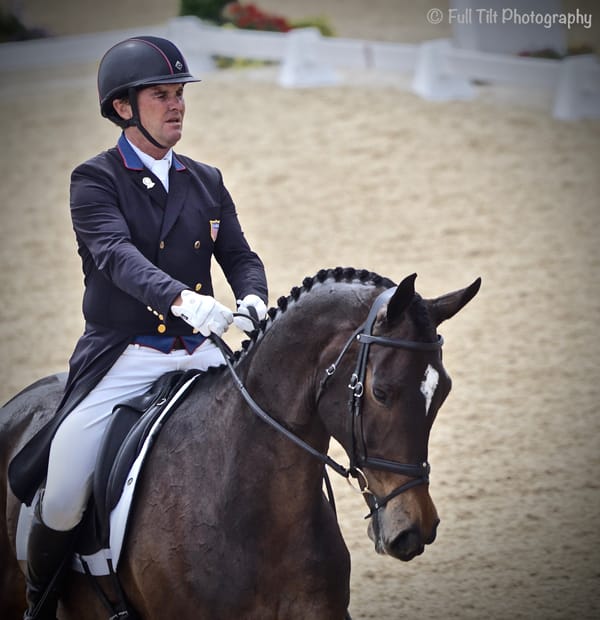
This exercise will specifically help you to locate and be more aware of your abdominal muscles when riding.

Lesley's Corner
This exercise will specifically help you to locate and be more aware of your abdominal muscles when riding.
Tip/Quote of the Day!
Every time you begin a Dressage test at a show, make sure you think about making a good first impression with a forward, confident center line, and a smile for the judge!
Tip/Quote of the Day!
Some people misunderstand the term "on the forehand," which refers to the shoulders being down and the hind legs out behind the horse, regardless of where his head and neck are positioned. A low head and neck does not mean a horse is on the forehand, any more
Tip/Quote of the Day!
Lots of little changes of frame in your Dressage warmup… a little stretching, a little up, and repeat… can help your horse to come more through his body.
Tip/Quote of the Day!
Let your plan be... to change and adapt your plan as much as necessary on course. Ultimately, you ride the horse, and not the plan.
Tip/Quote of the Day!
Long slow distance work is an important part of the conditioning program for every horse. But it is especially important for older and young horses. Older horses need to keep limber, and young horses need to build a base level of tendon, ligament, and bone strength.
Tip/Quote of the Day!
The rider's leg is for adding energy, and their seat governs the length of the horse's stride.
Tip/Quote of the Day!
Riders often tend to forget their outside leg in the equation of the bending aids. If you want to achieve true bend in the horse's ribcage, your outside leg must keep the hindquarters on the track.
Lesley's Corner
Most riders know that they should be focusing more on the horse's hind legs when riding and jumping. But with the temptation of the horse's head and neck visibly in front of us, this can be quite difficult! Here is a little mental trick that will help!
Tip/Quote of the Day!
All horses are naturally crooked to at least some degree. Good, correct Dressage training should eventually fix this however.
Tip/Quote of the Day!
"The better the rider’s balance in the saddle, the better the communication. There are two things the rider must be – balanced, and supple. The less good the rider’s seat, then the more often the rider is in the saddlery shop buying new saddles, new stirrups. The rider
Lesley's Corner
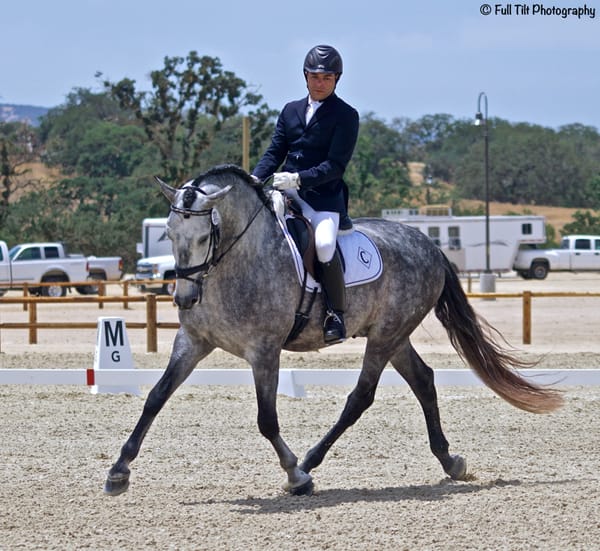
In this article, you will find an exercise to make sure that your horse is in lateral self carriage, which is a very important (yet rarely discussed) aspect of self carriage.